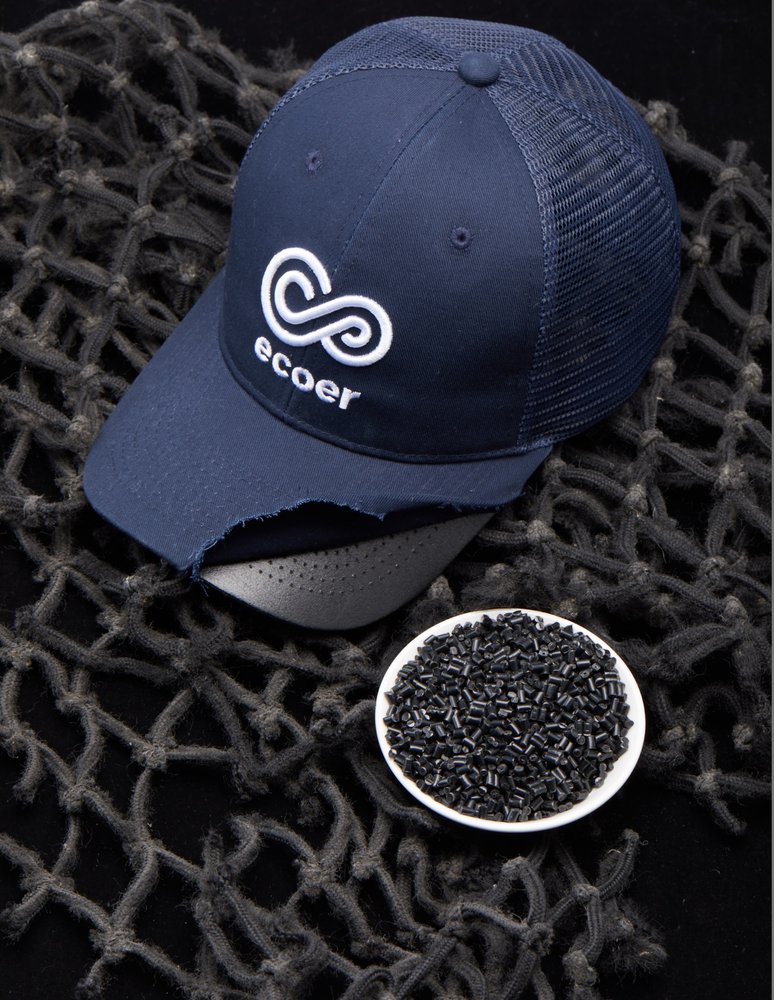
Somewhere in the ocean right now, a ghost net is fishing. Abandoned or lost fishing gear makes up a large share of the plastic in the Great Pacific Garbage Patch, and it keeps trapping marine life for decades. But that same nylon — strong, durable, engineered for saltwater — is also a premium raw material for a second life. This guide explains how discarded nets become regenerated nylon, what can be made from it, and how brands can build honest recycled fishing net product lines with certification that survives scrutiny.
The Ghost Net Problem in Numbers
The UN Environment Programme estimates that abandoned, lost or discarded fishing gear — so-called ghost gear — accounts for roughly 10% of all marine litter, and a much higher share of large plastic debris by volume in gyres. A single ghost net can continue trapping fish, turtles and seabirds for 30–50 years. Nets are lost through storms, gear conflicts, and deliberate dumping where port disposal fees make the ocean the cheaper option. Collection programs that pay coastal communities for end-of-life nets attack the problem from both ends: less plastic at sea, and a traceable feedstock for manufacturers. For brands, this traceability is the difference between a real ocean-plastic story and a marketing one.
From Net to Nylon: The Regeneration Process
Regenerated nylon starts with collected nets that are sorted, cleaned of organic matter and foreign plastics, then shredded. The recovered nylon (typically nylon-6) is depolymerized chemically back to caprolactam, its monomer building block, purified, and re-polymerized into virgin-grade nylon yarn. The chemistry matters commercially: because regeneration returns the polymer to monomer level, the output is indistinguishable from virgin nylon in strength, color uptake and durability — unlike mechanically recycled fibers, which can degrade with each cycle. The result is a drop-in material for knitting, weaving and injection molding with a dramatically lower carbon footprint than producing caprolactam from fossil feedstock.
What Can Be Made: Caps, Swimwear, Socks, Sunglasses
Regenerated nylon's properties — UV resistance, chlorine resistance, elasticity, strength — map neatly onto products that live hard lives in sun and water. In our own program, four categories perform especially well. Brim caps: the nylon knits into a firm, breathable crown with a subtle technical look; see the recycled fishing net brim cap for construction details. Swimwear: regenerated nylon with elastane handles chlorine and sunlight better than many virgin equivalents — our GRS recycled swimwear program uses it as the base. Socks: recycled nylon blends add durability zones to organic cotton bodies, a construction covered in our GRS recycled socks article. Accessories: even injection-molded items like sunglass frames can use regenerated nylon compounds.
GRS Certification and Chain of Custody
The Global Recycled Standard is the workhorse certificate for these products. GRS verifies recycled content percentage, tracks it through every processing stage, and layers in chemical and social requirements. As with GOTS, the buyer-facing documents are the facility's scope certificate plus transaction certificates per shipment stating the recycled content of your specific goods. One nuance: GRS requires a defined minimum recycled content for a product to claim the standard, and blends — say, recycled nylon over organic cotton — need the percentages documented at fiber level. Ask your manufacturer for the TC template before you finalize packaging copy, because “made from fishing nets” and “made with recycled nylon” are legally different claims in several markets.
Performance and Cost Versus Virgin Nylon
Performance parity is real: depolymerized regenerated nylon matches virgin nylon on tensile strength, abrasion and dye uptake, which is why it has been adopted by premium performance brands. Cost is the honest trade-off — regenerated nylon commands a premium over commodity virgin nylon because collection, sorting and depolymerization are expensive relative to fossil feedstock. In finished goods, however, the premium is usually a small share of retail price, and the story supports price points that commodity nylon cannot. Where cost matters most — sock bodies, for example — blends with GRS cotton capture most of the narrative at a gentler cost curve.
Telling the Story Without Greenwashing
Regulator scrutiny of ocean-plastic claims is rising fast, especially in the EU under green-claims directives. Follow four rules. Claim what your documents support: TCs state a recycled percentage, and your marketing should not exceed it. Name the standard (GRS) rather than vague phrases like “eco-friendly.” Be specific about feedstock — “regenerated nylon from end-of-life fishing nets” is verifiable; “ocean plastic” often is not, since much collected plastic never touched the open ocean. And keep evidence current: certificates renew annually, and the file backing your launch campaign must still be valid when a regulator or journalist asks two years later. Brands working with a sustainable hats manufacturer or recycled-program factory should request the documentation package as part of sampling, not after launch.
How FOCS Runs Its Recycled Fishing Net Program
Our program sources GRS-certified regenerated nylon yarn, knits and finishes in-house, and issues transaction certificates with every shipment covering cap, swimwear and accessory lines. Because we also run GOTS organic cotton programs, blended constructions — organic cotton bodies with recycled nylon reinforcement — are a specialty: one supply chain, two certified claims, one documentation package. For brands, that consolidation is the practical advantage: fewer audit trails, one QC standard, one shipping relationship for a collection that spans headwear, hosiery and swim.
MOQ and Lead Times for Recycled Nylon Programs
Because regenerated nylon is spun at dedicated mills, minimums are usually yarn-driven rather than garment-driven. For knitted caps and accessories, plan around 500–1,000 pieces per style when using stock regenerated nylon colors, and 1,000+ when custom shades require a new yarn lot. Swimwear minimums follow fabric-roll economics, typically 300–600 pieces per style once a fabric base is chosen. Blended programs — recycled nylon reinforcing an organic cotton sock body — inherit whichever yarn has the larger lot minimum, which is another reason blends are the friendliest entry point. On lead time, expect 6–10 weeks for a first recycled program including sampling and GRS documentation, versus 4–7 weeks for repeat orders on established yarns. Book regenerated nylon early if your launch is seasonal: certified supply is global and shared, and popular feedstock programs occasionally queue.
Frequently Asked Questions
Are recycled fishing net products as durable as virgin nylon?
Yes. Chemically regenerated nylon is depolymerized to monomer level and re-polymerized, producing fiber with tensile strength, abrasion resistance and colorfastness equivalent to virgin nylon. It is a drop-in replacement, not a compromise material.
How do I verify a product is really made from fishing nets?
Request the GRS scope certificate and the transaction certificate for your shipment, which states verified recycled content. Some yarn suppliers also offer feedstock traceability documentation showing net collection sources. If a supplier cannot produce a TC, treat the claim as marketing.
Which products make commercial sense first?
Caps and swimwear lead because their price points absorb the material premium and their use case matches nylon's strengths. Recycled-nylon-blend socks are the volume play, capturing the story at accessible pricing. Sunglasses and small accessories make strong halo products for a collection.
Can recycled fishing net nylon be combined with organic cotton?
Yes, and it is a common construction. GRS certifies the recycled component while GOTS certifies the organic fiber; a single manufacturer holding both scopes can issue documentation for both claims on one product, which is far simpler than coordinating two supply chains.
Continue Reading
- Recycled Fishing Net Brim Cap — product details
- GRS Recycled Fishing Net Swimwear
- GRS Recycled Socks: ocean plastic into premium hosiery
- Recycled Fishing Net Sunglasses