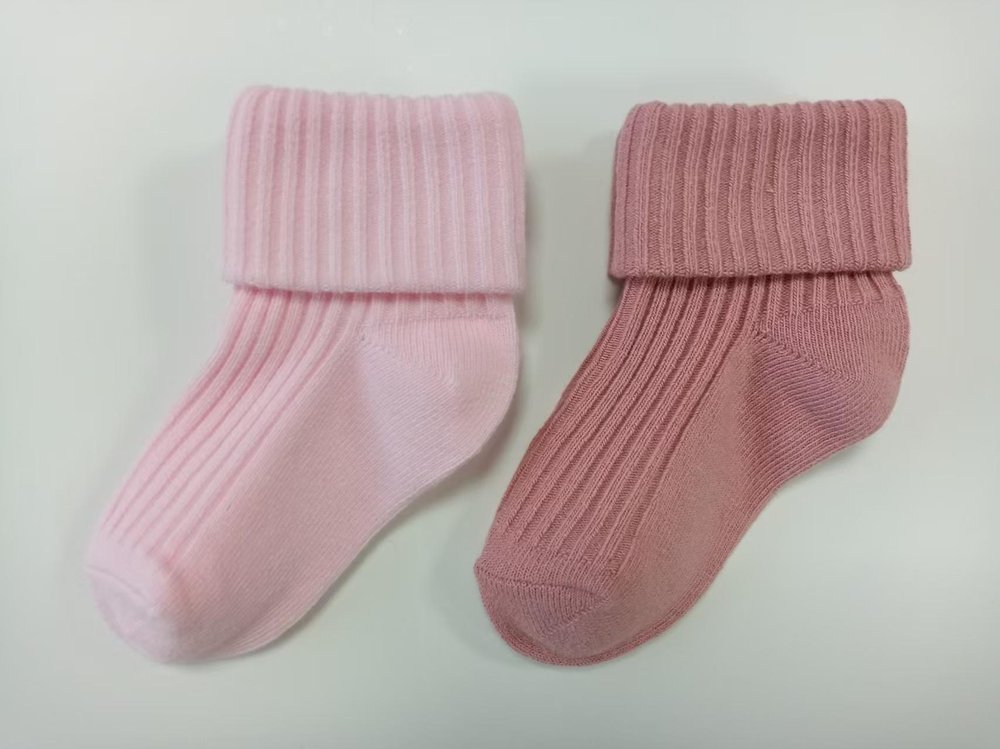
Most "how to launch a sock brand" articles stop at the theory. This one follows a real program from start to finish: a small European lifestyle brand (we will call them Nordwear) launching a 3-SKU line of GOTS-certified organic cotton socks, from first inquiry to goods on shelf. The timeline, the costs, the mistakes — all of it documented as it happened over twelve weeks.
The Starting Point
Nordwear arrived with a common profile: an existing apparel line in organic cotton basics, 40,000 followers, one wholesale account — and zero sock experience. Their brief: a crew sock and a ribbed knee-high for women, plus a unisex everyday crew, all in organic cotton, all GOTS-labelled, launching before the holiday season. Budget for the first order: under USD 10,000 including shipping.
Three constraints shaped every decision downstream:
- A hard deadline — goods needed to be in their EU 3PL warehouse 4 weeks before Black Friday, which put the clock at exactly 12 weeks from kickoff.
- GOTS labelling — not just "organic cotton" marketing copy, but a certified, labelled product with a traceable chain of custody.
- Retail price positioning of EUR 9.95 — which, working backward through their retail margin math, capped the landed per-pair cost at roughly USD 2.60.
Week 1-2: Tech Pack and Quote
The first mistake happened here, and it is the single most common one we see: Nordwear's initial tech pack was a mood board. Beautiful imagery, no measurement points. A sock tech pack that a factory can quote from needs, at minimum:
- Target size and country size chart (EU 36-38 / 39-42 / 43-46, or US equivalents)
- Foot length, leg length, and cuff height in centimeters with tolerance per point
- Target weight in grams (this drives 60% of the cost)
- Yarn composition and preferred blending ratio
- Knit structure: plain, terry foot, ribbed, or mesh zones
- Logo method: knit-in (jacquard), embroidery, or printed
After a working session to rebuild the tech pack properly, the quote came back at USD 1.65-2.10 per pair depending on SKU weight — inside their landed-cost ceiling with packaging and shipping added. The order was placed at 3,600 pairs total (1,200 per design, split across colorways), just above the 1,000-per-design threshold where unit economics stay sane.
Week 3-5: Yarn, Lab Dips, and Samples
With GOTS programs, yarn sourcing is not a catalog purchase. The certified organic cotton yarn had to come from a GOTS-certified spinning mill within FOCS' certified chain of custody — the certificate covering the whole chain, not just the knitting stage. Two of the three SKUs used an in-stock certified yarn, which saved ten days. The third (a heather mélange) required a fresh yarn lot, and this is where the schedule first slipped: three days lost waiting for the spinning mill's next dyed lot.
Lab dips for the six colorways took nine days for approval. Nordwear approved five on the first round; the sixth — a sage green — needed two revisions. Lesson recorded: every colorway beyond the first three adds an average of 4 days to the sampling phase.
The counter samples (full production method, correct yarn, finished packaging mockup) shipped by express and arrived in week 5. Nordwear signed off with two adjustments: cuff height up 0.5 cm on the knee-high, and a switch from printed care labels to woven labels — a per-pair cost difference of USD 0.06 that survived their margin math.
Week 6-11: Bulk Production and Parallel Tracks
Bulk knitting ran across weeks 6-9. While the machines ran, three parallel tracks kept the schedule alive:
- Packaging production — recycled kraft header cards, printed in parallel, arriving at the packing line in week 9. Brands that leave packaging until after bulk knitting uniformly lose 2-3 weeks.
- Testing — physical performance tests (abrasion, shrinkage, colorfastness) on bulk production samples at an accredited lab, plus the GOTS chemical residue screening. Results in week 10: all passed, first submission.
- Documentation — the transaction certificate (TC) application, which is the document customs and auditors actually ask for, processed on the shipment date. The TC is the proof that these specific 3,600 pairs moved through the certified chain. It is the document buyers forget to request until their retailer asks for it.
QC at final inspection: AQL 2.5 sampling, 1.8% defect rate found (mostly loose threads and one colorway with a slight cuff shade variance), all within tolerance. Goods packed and cartoned in week 11, exactly on the revised schedule.
Week 12: Shipping Decision
Ocean freight quoted at 38 days door-to-door — five days too late against the deadline. The decision matrix:
| Option | Door-to-door | Added cost | Verdict |
|---|---|---|---|
| Ocean LCL | 38 days | — | 5 days late |
| Rail (China-EU) | 22 days | +USD 480 | ✓ Chosen |
| Air express | 6 days | +USD 3,900 | Killed the margin |
Rail freight at +USD 480 for the shipment (about +USD 0.13 per pair) made the deadline with ten days of buffer. Goods landed, cleared EU customs with the TC and commercial invoice aligned, and hit the webshop and the single wholesale account three weeks before Black Friday.
The Full Cost Sheet
| Cost line | Amount (USD) | Per pair |
|---|---|---|
| Knitting, yarn, finishing (3,600 pairs) | 6,660 | 1.85 |
| Woven labels + kraft header cards | 972 | 0.27 |
| Lab testing + documentation | 1,050 | 0.29 |
| Rail freight + customs | 1,240 | 0.34 |
| Total landed | 9,922 | 2.76 |
Against the EUR 9.95 retail price with a standard wholesale/retail split, the program cleared the margin hurdle — barely. The second order, at 8,000 pairs with no sampling or testing repeats, is projected to land closer to USD 2.35 per pair.
Five Pitfalls That Nearly Derailed It
- The mood-board tech pack. Two weeks of pre-production time burned on rebuilding a spec that should have arrived complete.
- The sixth colorway. Sage green cost 11 days across two lab dip revisions. First-time brands should cap at 3-4 colorways.
- Shipping quote optimism. The original plan assumed 30-day ocean freight — a 2023-era number. Always quote rail and air in parallel from the start.
- Label changes after bulk started. The printed-to-woven label switch was caught early enough, but a change after yarn purchase would have forced re-testing.
- Forgetting the TC. Nordwear's wholesale account requested the transaction certificate two days after the invoice was paid. Because the TC application was filed at shipment, the document was ready. File it on shipment day, every time.
What We Would Tell the Next First-Time Brand
The compressible version of twelve weeks of lessons:
- Build the tech pack to measurement-point level before asking for quotes — it halves the pre-production phase.
- Order 1,000+ pairs per design or accept that unit economics will hurt.
- Run packaging and testing in parallel with knitting, never after it.
- Cap first-order colorways at four.
- Demand the scope certificate and TC before the deposit, not after the goods ship.
- Add two weeks of calendar buffer to whatever schedule feels comfortable — the yarn lot will eat it.
Frequently Asked Questions
How long does it take to launch a private label organic sock line?
From approved tech pack to finished goods landing in your warehouse, a first GOTS-certified private label program typically runs 10-14 weeks: 2-3 weeks for yarn sourcing and lab dips, 3-4 weeks for sampling and approvals, 5-6 weeks for bulk production, and 4-6 weeks for ocean shipping to Europe. Air freight can compress shipping to 5-7 days at roughly 8-12 times the ocean cost per kilogram.
What MOQ should a new sock brand start with?
For private label organic socks, a realistic first order is 1,000-3,000 pairs per design, split across 3-5 colorways. Below 1,000 pairs per design, yarn dyeing minimums and machine setup costs push the per-pair price up sharply. Many factories advertise 500-pair MOQs, but at that volume the unit economics rarely work for retail — it is best reserved for market-testing SKUs.
Do I need my own GOTS certificate to sell organic socks?
No. The certified operator in the supply chain is the manufacturer, not the brand. A factory with valid GOTS scope certification (like FOCS, certified by Control Union) can produce and label goods as organic, and the brand can reference the certificate in marketing. However, if the brand itself takes ownership of the goods and re-labels them, a separate GOTS or OCS scope certificate for the brand entity becomes necessary — most first-time brands avoid this by having the factory ship finished, labelled goods.
How much does a private label organic sock program cost?
For a 3,000-pair first order of GOTS organic cotton crew socks: yarn and knitting typically run USD 1.40-2.20 per pair depending on weight and pattern complexity, packaging adds USD 0.10-0.45 per pair, and testing plus certification documentation adds a fixed USD 800-1,500 per program. Total first-order budgets of USD 6,000-10,000 including shipping are typical for a market entry run.
What can go wrong in a first sock program?
The five most common issues we see: (1) tech packs without measurement points, causing size drift between sample and bulk; (2) approving samples on a phone screen instead of physical counter samples; (3) underestimating packaging lead time, which runs in parallel with knitting; (4) late fiber-composition changes that force re-testing; and (5) booking shipping too optimistically during pre-Christmas capacity crunches.
Can the factory handle EU labeling requirements?
Yes. A GOTS-certified factory produces EU-compliant labels including fiber composition in required languages, care symbols per EN ISO 3758, country of origin, and the GOTS license number of the certified chain. The brand remains responsible for registering in packaging EPR schemes in its own markets (such as LUCID in Germany), which cannot be delegated to the manufacturer.
How do I verify a factory's organic claims before paying a deposit?
Ask for the factory's current scope certificate (not a marketing page), verify the certificate number directly in the certifier's public database — Control Union and other approved certification bodies maintain public GOTS databases — request transaction certificates (TCs) from previous shipments as proof the chain of custody actually operated, and confirm the specific product categories you are buying are within the certificate's scope, not just the company's overall certification.
Continue Reading
- FOCS Private Label Organic Socks service page
- Low MOQ Socks Manufacturer (first-batch-friendly)
- GOTS Certified Socks Factory in China
- The GOTS Certification Process, Explained End to End
- Private Label Sock Packaging: 9 Options